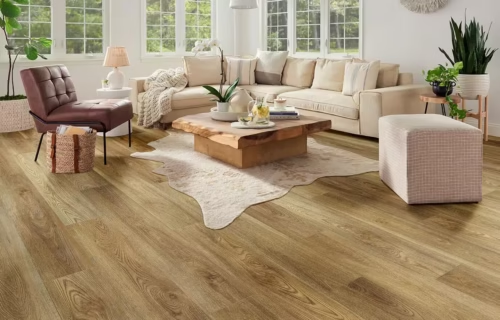
Vitrified Tiles vs Marble Flooring: Which Should You Choose
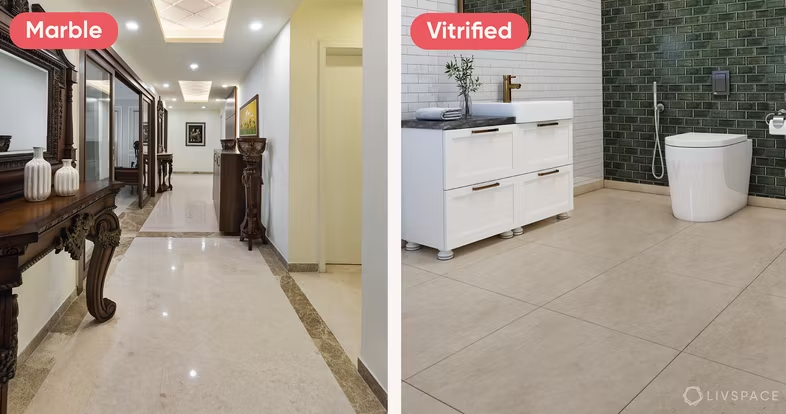
Every homeowner planning a new build or renovation eventually lands on this exact debate. Marble carries that timeless, premium look people genuinely love. Vitrified tile offers practicality that marble simply can’t match. The vitrified tiles vs marble decision isn’t really about which one is objectively “better” — it’s about which trade-offs suit your specific home, budget, and how much maintenance you’re realistically willing to do. In 2026, with vitrified tile technology having closed a lot of the visual gap with natural stone, this comparison looks a bit different than it did a decade ago. Let’s break it down honestly.
Understanding What Actually Separates These Two Materials
Marble is a natural stone, quarried and cut, meaning no two slabs are ever quite identical. Vitrified tile is manufactured, meaning consistent patterns and far more predictable performance.
I’ve noticed people assume marble is automatically the “premium” choice and vitrified tile the “budget” one, but that’s an oversimplification — high-end vitrified tiles with marble-effect printing can look remarkably close to real marble, at a fraction of both cost and maintenance headache.
H3: Core Differences at a Glance
- Marble is porous and needs regular sealing; vitrified tile is non-porous and needs none
- Marble scratches and etches more easily; vitrified tile resists both considerably better
- Marble offers unique natural veining; vitrified tile offers consistent, repeatable patterns
- Marble typically costs more upfront and in ongoing maintenance than vitrified tile
Cost Comparison: Upfront and Long-Term
Direct answer: Vitrified tile typically costs ₹40-120 per square foot including installation, while marble ranges from ₹150-400 per square foot depending on quality and origin — meaning the vitrified tiles vs marble cost gap is substantial both upfront and over time once maintenance is factored in.
- Standard vitrified tile: ₹40-80 per sq ft, suitable for most residential applications
- Premium double-charge or full-body vitrified tile: ₹80-120 per sq ft, closer in appearance to natural stone
- Indian marble (Makrana, Ambaji): ₹150-250 per sq ft depending on quality grade
- Imported marble (Italian, for instance): ₹250-400+ per sq ft, a significant premium for specific aesthetic appeal
Picture a small business owner in Jaipur renovating a showroom, wanting a premium look without marble’s ongoing maintenance demands. High-quality vitrified tile with a marble finish delivered nearly the same visual impact at roughly half the material cost.
Durability and Daily Wear Resistance
Has this ever happened to you — noticed a scratch or dull patch on marble flooring from something as simple as dragging a chair across it? Marble is genuinely more delicate than most people expect going in.
- Vitrified tile resists scratches from furniture, footwear, and daily foot traffic significantly better than marble
- Marble etches when exposed to acidic substances — even accidental contact with lemon juice or vinegar leaves a permanent mark
- Vitrified tile’s manufactured hardness makes it more forgiving in households with pets or young children
- Marble requires more careful furniture placement and protective pads to avoid visible wear over time
Maintenance Requirements Differ Significantly
Direct answer: Marble requires periodic resealing (every 1-2 years) and careful cleaning with pH-neutral products, while vitrified tile needs virtually no sealing and tolerates a wider range of cleaning products — a major practical advantage in the vitrified tiles vs marble comparison for busy households.
- Marble: needs pH-neutral cleaners only, periodic resealing, and prompt spill cleanup to prevent staining
- Vitrified tile: tolerates standard floor cleaners, requires no resealing, and resists staining from most household spills
- Marble maintenance costs, including periodic professional polishing, add up over a decade in ways many buyers don’t initially budget for
- Vitrified tile’s low-maintenance nature makes it a more practical choice for rental properties or households without time for careful floor care
Visual Appeal and Design Flexibility
This is genuinely where marble still holds an edge for a lot of homeowners, and I won’t pretend otherwise. Natural veining patterns are unique in a way manufactured tile simply can’t fully replicate.
- Marble offers one-of-a-kind natural patterns, appealing for statement areas like entryways or feature walls
- Premium vitrified tiles now use advanced printing technology that closely mimics marble’s look, closing much of the visual gap
- Vitrified tile offers more consistent, predictable results across large areas, useful for uniform commercial or residential spaces
- Marble’s natural variation can be a selling point or a drawback depending on whether you want uniformity or organic uniqueness
Which Rooms Suit Which Material Better
Not every room benefits equally from either choice, and this is worth thinking through room by room rather than committing to one material for the whole house.
- High-traffic areas (living rooms, hallways): vitrified tile’s durability makes more practical sense
- Statement spaces (entryway, feature walls): marble’s unique visual appeal justifies the extra maintenance
- Kitchens and bathrooms: vitrified tile’s water and stain resistance outperforms marble’s porous, more vulnerable surface
- Bedrooms: either works, though vitrified tile remains the lower-maintenance, more budget-friendly choice for most households
Resale Value Considerations
Buyers and appraisers view both materials favorably, though for somewhat different reasons.
Marble often reads as a premium, luxury signal to buyers, particularly in higher-end properties. Vitrified tile, meanwhile, signals practicality and lower maintenance burden — a genuine selling point for buyers who don’t want the upkeep marble demands.
FAQ: Vitrified Tiles vs Marble Questions
Is marble really more prestigious than vitrified tile? Traditionally yes, though premium vitrified tiles with marble-effect finishes have narrowed that perception gap considerably in recent years.
Which material is better for homes with young children or pets? Vitrified tile, generally — its scratch and stain resistance holds up better against the wear and tear that comes with kids and pets.
Does marble flooring increase home resale value more than vitrified tile? It can, particularly in premium markets, though vitrified tile’s lower maintenance appeals to buyers who prioritize practicality over prestige.
How often does marble flooring need professional maintenance? Resealing every 1-2 years is standard, with occasional professional polishing recommended every few years depending on wear and traffic.
Can vitrified tile really look as good as real marble? High-end double-charge or full-body vitrified tiles come remarkably close visually, though marble’s natural veining remains genuinely unique.
Is vitrified tile a safe choice for bathroom flooring compared to marble? Yes — vitrified tile’s non-porous, water-resistant surface handles bathroom moisture better than marble’s more porous nature.
Final Thoughts
The vitrified tiles vs marble decision ultimately comes down to how much you value marble’s unique visual appeal against vitrified tile’s practicality, durability, and lower long-term cost. For high-traffic or moisture-prone areas, vitrified tile usually makes more sense. For a statement space where maintenance isn’t a dealbreaker, marble’s natural beauty still holds real appeal. Consider mixing both — marble where it counts visually, vitrified tile where daily wear matters most.
Suggested image alt text:
- “Polished marble flooring in living room entryway”
- “Vitrified tile flooring with marble-effect finish”
- “Comparison of marble and vitrified tile samples side by side”