Exploring Modern Water Treatment Options for a More Comfortable Home
Water plays a quiet but important role in almost everything we do at home. It fills our glasses, runs through the washing machine, helps us cook, and keeps our showers going. Yet, when water leaves behind stubborn scale, smells unusual, or affects the way appliances work, it quickly becomes something we can’t ignore.
Fortunately, modern water treatment offers several ways to address common water-quality concerns. From alternatives to traditional softeners to advanced disinfection systems, homeowners have more choices than ever. The important part is knowing what each system is designed to do and whether it fits the actual conditions of your water supply.
Start With the Problem, Not the Product
It’s easy to get drawn into product comparisons before understanding what needs to be fixed. A better approach is to identify the symptoms first. Are you dealing with hard water, sediment, unpleasant odors, or concerns about microorganisms? Each issue may require a different treatment method.
Water testing can help establish a useful baseline. Depending on the source and the concerns involved, testing may examine hardness, pH, iron, manganese, chlorine, total dissolved solids, and other relevant characteristics. Some contaminants require specialized laboratory analysis.
This information matters because no single treatment system is designed to solve every water-quality problem. Choosing equipment based on a test result—or a clearly identified concern—is generally more practical than buying a system simply because it is popular.
Understanding Salt-Free Water Conditioners
For homeowners who want to address scale without using traditional salt-based softening, salt-free water conditioners are an option worth exploring. These systems are generally designed to condition hardness minerals rather than remove them from the water.
Many salt-free systems use a process often described as template-assisted crystallization or another scale-control technology. The goal is to encourage minerals to form microscopic crystals that are less likely to attach to plumbing surfaces.
That distinction is important. A salt-free conditioner typically does not reduce water hardness in the same way an ion-exchange softener does. Calcium and magnesium may still remain in the water, and the system should not be marketed as a universal solution for every hard-water symptom.
For some households, scale control may be the main priority, especially if they want to avoid salt handling or reduce certain maintenance requirements. Before purchasing, ask for clear information about the technology, expected performance, water conditions, and any independent testing that supports the claims.
Where UV Water Disinfection Fits In
Water treatment isn’t only about taste, minerals, and stains. In some situations, microbial concerns may also need attention. UV water disinfection is one technology used to help control certain microorganisms in water.
Ultraviolet systems expose water to UV light at a specific wavelength, disrupting the ability of many microorganisms to reproduce. When properly designed and operated, UV treatment can be useful for water supplies where microbial contamination is a concern.
However, UV systems have important limitations. They do not remove sediment, dissolved minerals, chemicals, or unpleasant tastes. Water may also need pre-filtration because excessive turbidity can interfere with the light reaching microorganisms.
Maintenance matters here, too. UV lamps need replacement according to the manufacturer’s schedule, and the quartz sleeve must remain clean. A system should be selected based on the water quality, flow rate, and treatment requirements—not simply installed as an extra layer of equipment.
For private-well owners, it is especially important to test the water and understand the source of any microbial concern before deciding on treatment.
Why Commercial Water Treatment Requires Careful Planning
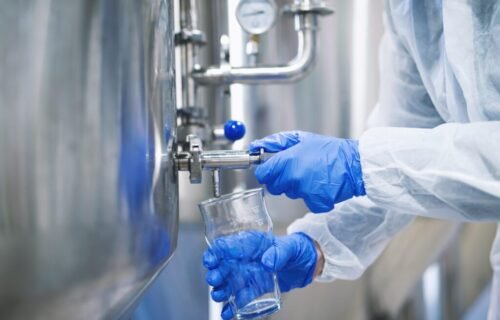
Homes aren’t the only places where water quality matters. Restaurants, offices, hotels, healthcare facilities, manufacturing sites, and other businesses may depend on water for drinking, cleaning, food preparation, equipment operation, or production processes. In these settings, commercial water treatment often requires a more detailed approach.
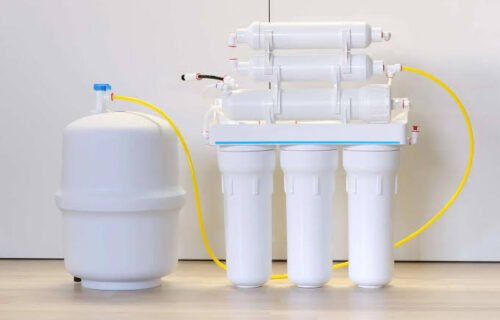
Commercial systems may need to handle higher flow rates, greater water volumes, and more demanding operating conditions than residential equipment. Depending on the business, treatment may involve softening, filtration, reverse osmosis, carbon treatment, disinfection, or specialized processes.
For example, a restaurant may be concerned about scale in dishwashing equipment and the taste of water used in beverages. A manufacturing facility may need water with specific chemical characteristics for its processes. A hotel may want to reduce scale and improve guest comfort across many rooms.
The right system depends on the application. A commercial water treatment provider should assess water usage, peak demand, equipment requirements, applicable regulations, and maintenance logistics before recommending a design.
The Importance of Flow Rate and System Capacity
One detail that is easy to overlook is capacity. A system that works well for a small household may not perform properly when several fixtures operate at once or when a business experiences peak demand.
Flow rate refers to how much water a system can treat over a given period while maintaining its intended performance. If equipment is undersized, users may experience pressure drops, inconsistent treatment, or reduced efficiency.
When comparing systems, ask about service flow rate, maximum flow rate, recovery rate where relevant, and the conditions under which performance was measured. These technical details may seem a little dry, but they can make a big difference in real-world use.
A professional installer should also consider available space, drainage, electrical requirements, plumbing configuration, and whether additional pre-treatment is necessary.
Maintenance Should Be Part of the Conversation
A water treatment system isn’t something you install and forget. Filters need replacement, UV components need inspection, and conditioning or softening systems may require regular servicing. Even equipment with low-maintenance features still needs attention.
Before buying, ask what routine maintenance involves and how much replacement parts typically cost. Find out whether the provider offers service plans, troubleshooting support, or reminders for scheduled maintenance.
It’s also wise to keep track of changes in water taste, odor, pressure, and appearance. These signs don’t always indicate a serious problem, but they can signal that equipment needs inspection or that the water source has changed.
Making a Sensible Investment
Modern water treatment can offer real benefits, but the most advanced-looking system isn’t necessarily the most suitable one. A good decision balances performance, cost, maintenance, and the actual needs of the property.
Look for providers who explain their recommendations clearly and distinguish between what a system can reduce, what it cannot remove, and what testing is still required. Be cautious of broad promises such as “removes everything” or “makes all water safe” without supporting details.
Whether you’re considering a salt-free conditioner, UV disinfection, or a larger commercial setup, the same principle applies: understand the problem first, then choose the technology.
A More Informed Way to Improve Water Quality
Water treatment works best when it’s based on facts rather than assumptions. Testing, proper system sizing, professional installation, and regular maintenance all contribute to better results.
For homeowners and businesses alike, the goal isn’t simply to add equipment to a plumbing system. It’s to create a water solution that addresses genuine concerns, operates reliably, and makes everyday tasks easier.
With the right information and a thoughtful approach, modern water treatment can become a practical investment in comfort, efficiency, and long-term water management.