Better Water at Home Begins With Choosing the Right Treatment

Water plays a quiet but important role in everyday life. It’s there when you make coffee before work, wash vegetables for dinner, take a shower after a long day, or run the washing machine on a busy weekend. Because these routines feel so ordinary, it’s easy to overlook water quality until something changes. Perhaps your glass of water has an odd taste, white marks keep appearing on the shower screen, or your faucets seem to collect stains almost overnight.
These issues can be frustrating, especially when you’re unsure what’s causing them. The good news is that many household water concerns can be addressed with the right information and a suitable treatment system. The important part is knowing what your water needs rather than buying equipment based on a sales pitch or a neighbour’s experience.
Start by Understanding Your Water
Water quality varies from one property to another. Municipal supplies are generally treated before distribution, but the mineral content, taste, and other characteristics can still differ by location. Private wells have their own challenges because local geology, rainfall, nearby land use, and the condition of the well can influence the water.
Household clues can help you decide whether further investigation is needed. White deposits around faucets may indicate hard water, while reddish-brown staining can sometimes be associated with iron. An unpleasant smell or unusual taste may have several possible explanations. However, these signs are only clues. Some substances cannot be detected by looking at or tasting the water.
A suitable water test gives you a clearer starting point. If you receive municipal water, reviewing the supplier’s water-quality report can be useful. Homeowners using private wells should arrange testing appropriate to their location and circumstances. Depending on the concern, this may include checks for hardness, iron, bacteria, nitrates, or other substances.
Choose tests that address your actual concerns. A simple hardness test, for example, cannot establish whether water is free from every health-related contaminant. When safety is in question, a certified laboratory or qualified water professional can help identify the appropriate testing process.
Treat Water Throughout the House
Some homeowners want to improve water quality at several fixtures rather than treating only the kitchen tap. In these cases, whole-home filtration may be worth considering. These systems are usually installed where the water supply enters the property, allowing treated water to flow to multiple taps, showers, and appliances.
The filter type depends on what the water test reveals. Sediment filters can capture particles such as sand and rust. Activated carbon filters may reduce certain tastes, odors, and selected compounds. Other technologies are designed for different concerns, so it’s important to understand what each system is intended to do.
A whole-house system also needs to suit the household’s water demand. A home with several bathrooms may use water at multiple fixtures at once, especially during busy mornings. If a filter is too small for the required flow rate, pressure can become inconvenient. Ask about the system’s capacity and how it performs under normal household conditions.
Installation and accessibility deserve attention, too. Filter housings need enough space for cartridge changes, and some equipment requires drainage, electricity, or additional plumbing. These practical details may not be the most exciting part of choosing a system, but they make a real difference when maintenance is due.
Whole-home filtration is not automatically necessary for every property. If the concern is limited to drinking water at one faucet, a smaller point-of-use filter may be more economical. The aim is to match the equipment to the problem, not to install more than you need.
Give Drinking Water Special Attention
Many households are particularly concerned about the water they drink and use for cooking. Taste matters, of course, but so does understanding which substances a treatment system can reduce. Clear water is not necessarily free from every unwanted contaminant, and unpleasant-tasting water is not always unsafe.
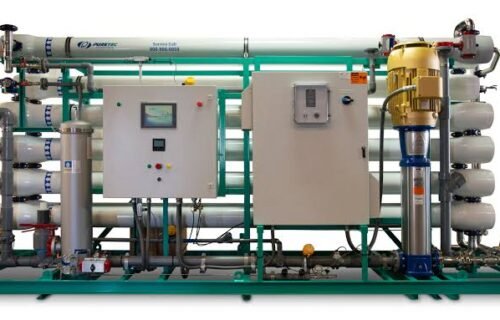
Depending on the test results, reverse osmosis drinking water may be an option to explore. Reverse osmosis systems push water through a semipermeable membrane that reduces many dissolved substances. Some units combine the membrane with prefilters and a final carbon filter to support performance and improve taste.
These systems are commonly installed beneath the kitchen sink. Before buying one, check the available cabinet space, the location of the drain connection, and whether the unit uses a storage tank. Reverse osmosis systems also produce wastewater, and their filters and membranes need replacement at intervals specified by the manufacturer.
Think about how your household uses drinking water. A small family that fills a few glasses and makes coffee may have different needs from a larger household that regularly fills bottles, prepares meals at home, and uses substantial amounts of filtered water throughout the day.
Most importantly, verify the system’s documented performance. If you want to reduce a particular contaminant, check whether the model has been tested and certified for that purpose. A general claim that a product “purifies water” is not enough to establish what it can actually remove.
Manage Hard Water Before It Becomes a Bigger Nuisance
Hard water contains elevated levels of dissolved minerals, particularly calcium and magnesium. These minerals can leave pale deposits on showerheads, faucets, glassware, and the inside of water-using appliances. Some people also notice that soap lathers poorly or that freshly washed clothes feel less soft.
For households dealing with these problems, water softeners can be a practical solution. Conventional ion-exchange softeners reduce hardness by exchanging calcium and magnesium ions for other ions, commonly sodium. This helps limit mineral scale and can improve the way soap behaves during washing.
However, a softener is not a universal water purifier. It is designed primarily to address hardness, not to remove every contaminant that might be present. If testing identifies another concern, additional treatment may be needed.
Before installation, consider your household’s water use, available space, and willingness to perform routine maintenance. Traditional softeners generally require salt replenishment and periodic regeneration. Some homeowners also have specific concerns about sodium in treated water, so it’s sensible to discuss those needs with a qualified professional before choosing a system.
Proper sizing matters. A system that is too small may regenerate frequently, while an oversized unit can increase costs without offering much extra value. Water hardness and household demand are useful factors when deciding which capacity makes sense.
Remember That Every System Needs Maintenance
Installing treatment equipment is only the beginning. Filters become loaded with particles, carbon media has a limited service life, and reverse osmosis membranes can gradually lose performance. Softeners also need checks to confirm that they are operating as intended.
Follow the manufacturer’s maintenance schedule and keep a record of filter replacements, service visits, and water-test results. A reminder on your phone can be enough to prevent a cartridge from being forgotten for months. It’s a small task, but it helps protect the system’s performance.
Pay attention to changes in water pressure, taste, odor, or the return of mineral deposits. These signs do not always mean the equipment has failed, but they may indicate that servicing or further testing is needed. If the water source changes or a private well is affected by flooding or nearby environmental changes, additional testing may also be appropriate.
Choose a Solution That Fits Your Life
The best water-treatment decision starts with understanding the problem. Test when necessary, compare equipment based on documented performance, and ask about installation, operating costs, replacement parts, and ongoing service. A system that looks affordable at first may become expensive if its filters are difficult to find or require frequent replacement.
Be cautious of promises that one device can solve every water concern. Different technologies have different purposes, and no single product should be assumed to remove all unwanted substances.
When you choose based on evidence rather than guesswork, the process becomes much more manageable. The right system is one that suits your home, addresses a clearly identified need, and remains practical to maintain. That’s what makes better water a lasting improvement rather than another piece of equipment you have to worry about.