Making Better Water Choices for a Healthier, More Comfortable Home
Most of us don’t think much about household water until something feels off. Maybe the tap water has an odd smell. Perhaps the shower leaves stubborn white deposits on the glass, or the water tastes different from what you’re used to. Sometimes the problem is obvious. Other times, you just have a nagging feeling that the water coming into your home could be better.
That’s where modern water treatment can help. The trick, though, isn’t simply buying a filtration system because it has impressive features on the box. Water quality varies from one property to another, and what works beautifully for one household may be unnecessary for another.
Good water treatment starts with understanding the problem first.
Your Home’s Water Has a Story
Water can pick up minerals and other substances as it travels through underground formations, municipal infrastructure, wells, storage tanks, and household plumbing. Even homes in the same neighborhood can experience noticeably different water conditions.
Hard water is one common example. Calcium and magnesium can leave scale on faucets and appliances, make soap harder to rinse away, and give freshly washed clothes a slightly stiff feel. It may not be the sort of problem that sends you running for the phone, but after a while, the buildup gets annoying.
Other households may be more concerned about chlorine taste, sediment, unpleasant odors, or specific contaminants.
Before choosing equipment, testing the water is often a sensible move. It gives you something concrete to work with instead of relying on guesswork.
Choosing a Solution That Fits Your Home
Water treatment has become a surprisingly broad category. There are simple faucet filters, under-sink units, softeners, filtration tanks, and multi-stage purification equipment. Some systems are designed for one drinking-water tap, while others treat water throughout the property.
The best residential solutions are usually the ones built around a home’s actual needs rather than a long list of fancy specifications.
For example, if your only complaint is unpleasant taste, you probably don’t need an elaborate whole-property setup. A quality point-of-use filter may be perfectly adequate. If hard water is causing scale throughout the plumbing system, however, treating only the kitchen tap won’t solve the underlying issue.
It sounds obvious, but matching the treatment method to the problem saves money — and plenty of frustration.
Drinking Water Deserves Extra Attention
The water used for drinking and cooking deserves a little more thought than water used for washing floors or watering the garden. Depending on the local supply, people may choose filtration to improve taste, reduce certain substances, or provide an additional treatment barrier.
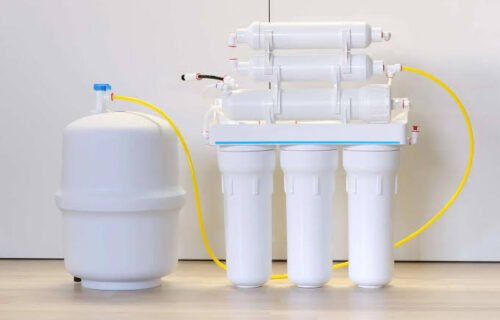
Different drinking water systems use different technologies. Activated carbon is commonly used to improve taste and odor and reduce certain chemicals. Reverse osmosis uses a semipermeable membrane to reduce many dissolved substances. Other systems may use ultraviolet treatment or additional filtration stages for particular water-quality concerns.
There’s no universal winner here. A technology that’s excellent for one issue may not be designed to address another.
That’s why it’s worth checking exactly what a system is certified or tested to reduce instead of assuming that “filtered” automatically means “everything removed.” It doesn’t.
What About the Whole House?
If water quality problems show up at multiple taps, a point-of-use filter might feel like putting a bandage on a larger problem.
A whole-house system treats water as it enters the property, meaning the water supplied to showers, sinks, washing machines, and other fixtures passes through the treatment equipment. This can be especially useful when sediment, unpleasant odors, or certain contaminants are present throughout the household supply.
Whole house water filters come in different configurations, and their effectiveness depends on the filtration media, flow rate, incoming water quality, and system design.
One thing people sometimes overlook is water pressure. A filter that’s too restrictive for the home’s plumbing can make showers feel disappointingly weak. Nobody wants to spend money improving their water only to wonder where the pressure went.
Don’t Forget Hard Water
Filtration and water softening are related, but they aren’t the same thing.
A traditional water softener is designed primarily to reduce hardness minerals such as calcium and magnesium. It can help minimize scale and make cleaning easier. Filtration systems, meanwhile, are generally selected to address other water-quality concerns.
If you’re dealing with obvious mineral buildup on showerheads, faucets, or appliances, it’s worth investigating hardness rather than assuming a standard filter will solve it.
And there’s another practical consideration: softeners can require ongoing salt replenishment and maintenance. The long-term running cost should be part of the decision from day one.
Maintenance Is Part of the Deal
A water treatment system isn’t a magic box you install once and forget about.
Filters need changing. Some membranes require replacement. Certain systems need cleaning, sanitizing, or professional servicing. A neglected filter may perform poorly, and an overdue maintenance schedule can undermine the whole reason you bought the equipment in the first place.
Before purchasing, check replacement intervals and prices. Find out whether cartridges are readily available. Look at the warranty, too.
A system that costs a little more initially but has straightforward maintenance may prove less expensive — and less irritating — over several years.
Installation Shouldn’t Be an Afterthought
Some filtration equipment is simple enough for a confident homeowner to install. Other systems involve plumbing modifications, drainage connections, electrical components, or significant tanks and equipment.
For larger installations, professional help can be worthwhile. Correct sizing matters, and so does placement. The equipment needs enough room for servicing and replacement parts.
It’s also smart to think about your household’s future needs. A system that’s perfect for two people might feel undersized if your family grows or your water usage changes.
Spend on What You Actually Need
There is a temptation to buy the most advanced system available. More stages. More features. Bigger tank. Longer specification sheet.
But more isn’t automatically better.
Start with your water test and your household priorities. Decide whether you’re addressing taste, odor, sediment, hardness, or another specific concern. Then compare systems based on performance, installation, maintenance, replacement costs, and expected lifespan.
That approach may lead you to a modest filter rather than a sophisticated treatment plant under your kitchen counter. And that’s completely fine.
Better Water Doesn’t Have to Be Complicated
Clean, pleasant water can make a home feel better in ways you don’t always notice immediately. You taste it in your morning coffee. You see fewer deposits around the sink. You spend less time scrubbing fixtures. Small improvements add up.
The important thing is not to chase the newest technology or fall for the biggest marketing promise. Understand your water first, then choose equipment that genuinely addresses the issue.
After all, the best water treatment system isn’t necessarily the most expensive one. It’s the one that quietly does its job, fits your home, and makes everyday life just a little easier.